Healthcare access should not depend on where a person lives. Yet, for many communities in rural and remote parts of India, distance can still become a barrier to timely healthcare.
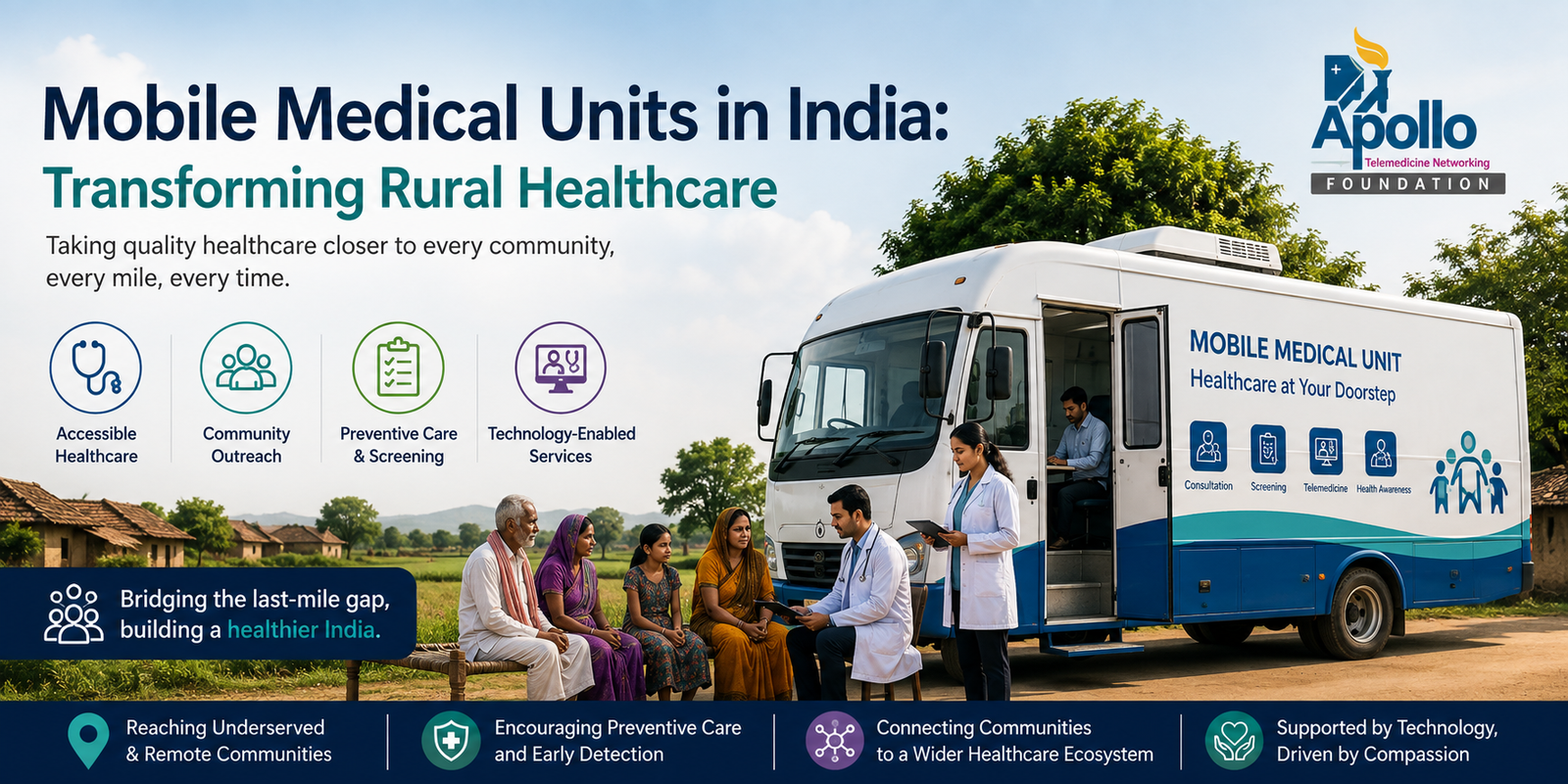
This is where mobile medical units in India are playing an important role. By taking healthcare services closer to communities, Mobile Medical Units (MMUs) are helping bridge geographical gaps, strengthen preventive healthcare, and create more opportunities for people to seek care closer to home.
India’s National Health Mission recognises MMUs as an important approach for reaching remote, difficult, underserved and unreached populations. The objective is simple but significant: take healthcare to the doorstep of communities that may otherwise face challenges accessing it.
Mobile Medical Units are healthcare facilities that travel to communities instead of requiring people to travel long distances to reach a healthcare facility.
Depending on the programme and community requirements, an MMU can support:
For organisations working in rural healthcare, this model offers an important advantage: mobility becomes a tool for accessibility.
At ATNF, our Mobile Medical Unit model is designed to take healthcare closer to villages and underserved communities through scheduled outreach. The model can support medical camps, consultations, screening initiatives, health education, referrals, and technology-enabled follow-ups.
Healthcare access is influenced by more than the availability of hospitals and clinics.
For someone living in a remote community, reaching a healthcare facility may involve considerable travel, transportation costs, time away from work or family responsibilities, and uncertainty about when and where services will be available.
These challenges can influence healthcare-seeking behaviour. A minor concern may be ignored until it becomes more difficult to manage. Preventive health checks may be postponed. Awareness about available services may remain limited.
Mobile healthcare changes the starting point. Instead of waiting for people to overcome every barrier to reach healthcare, the healthcare system can move closer to the communities themselves.
This is the larger value of healthcare outreach programs in India; they bring services, awareness, and opportunities for early engagement directly into communities.
Health camps have traditionally been an important part of community outreach. A well-planned health camp can create a valuable opportunity for people to interact with healthcare professionals, participate in screening activities, and learn more about preventive health.
But meaningful rural healthcare cannot end when a camp does. This is where structured Mobile Medical Unit programmes can make a difference.
With regular visits and planned outreach, communities can have more consistent opportunities to engage with healthcare services. Digital records and technology-enabled consultations can further support follow-ups and continuity, depending on the programme design.
At ATNF, our MMU model combines community outreach and technology to extend healthcare beyond the boundaries of conventional facilities.
Experience Technology-enabled Consultations
The most visible impact of mobile healthcare is accessibility.
Instead of expecting every individual to travel to a healthcare facility, an MMU can follow a planned route and reach communities at designated locations and times. This can make healthcare engagement more convenient for people living in geographically challenging areas.
Healthcare is not only about treating illness. Awareness, screening and early identification are equally important. MMUs can serve as platforms for preventive health activities and community education, encouraging people to pay greater attention to their health before concerns become more difficult to address.
Healthcare awareness becomes more meaningful when it reaches people where they live. Community-based programmes can create opportunities to discuss healthy practices, the importance of timely care, available healthcare resources and when professional medical advice should be sought. This makes health camps in India more than one-day events, they can become touchpoints for building a stronger culture of health awareness.
A Mobile Medical Unit does not have to function in isolation. When supported by referral networks, telehealth and established healthcare institutions, it can become part of a larger continuum of care. Technology can help connect people in remote locations with healthcare professionals who may not be physically present in the community.
ATNF’s approach focuses on using technology to extend the reach of experienced clinicians and healthcare services to underserved and geographically challenging communities.
Sustainable rural healthcare requires collaboration. CSR initiatives can play a meaningful role by supporting healthcare outreach programmes that are designed around the needs of specific communities. Rather than viewing healthcare CSR simply as a one-time health camp, organisations can consider longer-term models that combine outreach, awareness, screening, referrals and continuity of care.
This creates an opportunity for CSR investments to move from event-based intervention to sustained community impact.
ATNF works with partners to implement community healthcare programmes designed around underserved populations and local needs, with projects spanning multiple geographies across India.
Taking Healthcare to the Last Mile
The transformation brought by mobile medical units in India is ultimately not about the vehicle. It is about what the vehicle represents.
It represents a shift from healthcare that people must travel to, towards healthcare that actively reaches communities. It represents greater awareness, more opportunities for preventive care and stronger connections between underserved populations and the wider healthcare ecosystem.
India’s rural healthcare landscape is evolving, but the last-mile challenge remains important. Mobile healthcare models can help ensure that geography does not become an invisible barrier between people and the care they need.
At ATNF, we believe healthcare should extend beyond the boundaries of a hospital. Through Mobile Medical Units, telehealth, community screening and other technology-enabled interventions, we continue to work towards making quality healthcare more accessible to communities that need it most.
The future of rural healthcare is not simply about building more healthcare infrastructure. It is also about finding smarter, more accessible ways to connect existing healthcare expertise with communities that remain difficult to reach.
Mobile Medical Units are helping make that connection possible. When mobility, community outreach, technology and sustained healthcare partnerships come together, the journey towards equitable healthcare becomes more practical, and more human.
Because sometimes, transforming healthcare begins with something as simple as taking the first step towards the community.